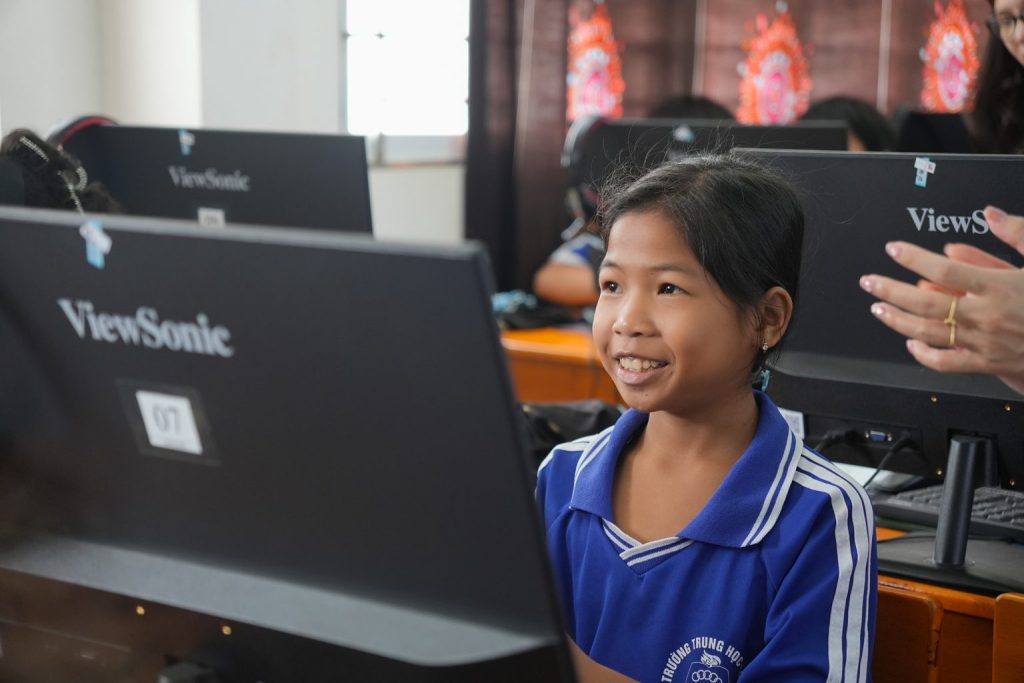
Across Vietnam, access to technology is becoming essential to education. Yet in many schools, especially in underserved areas, outdated equipment continues to limit how students learn and engage with the digital world.
At SCCUSA, our role is to connect supporters in the United States with trusted local partners working to address these gaps. One recent example comes from our partner, Saigon Children’s Charity, which has successfully upgraded three computer rooms in An Giang Province—improving learning conditions for more than 2,100 students each year.
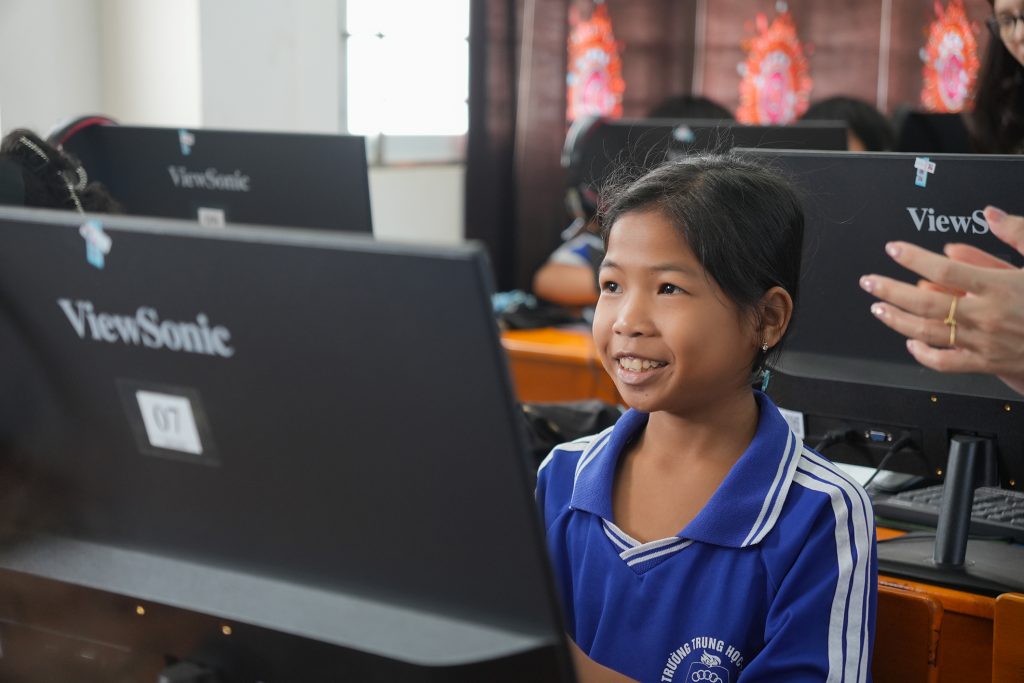
The project supports Lương Thế Vinh, Phan Bội Châu, and Võ Trường Toản secondary schools, where existing computer rooms had been installed years ago but had since deteriorated. Many machines no longer functioned reliably, and configurations varied widely, making it difficult for teachers to deliver consistent Informatics lessons. As the subject has become compulsory in Vietnam’s national curriculum, these limitations posed a growing challenge.
Through a partnership between Saigon Children’s Charity and UOB, alongside contributions from employees, volunteers, and participants of the UOB Heartbeat Run 2025, three upgraded computer rooms were completed and put into use in March 2026.
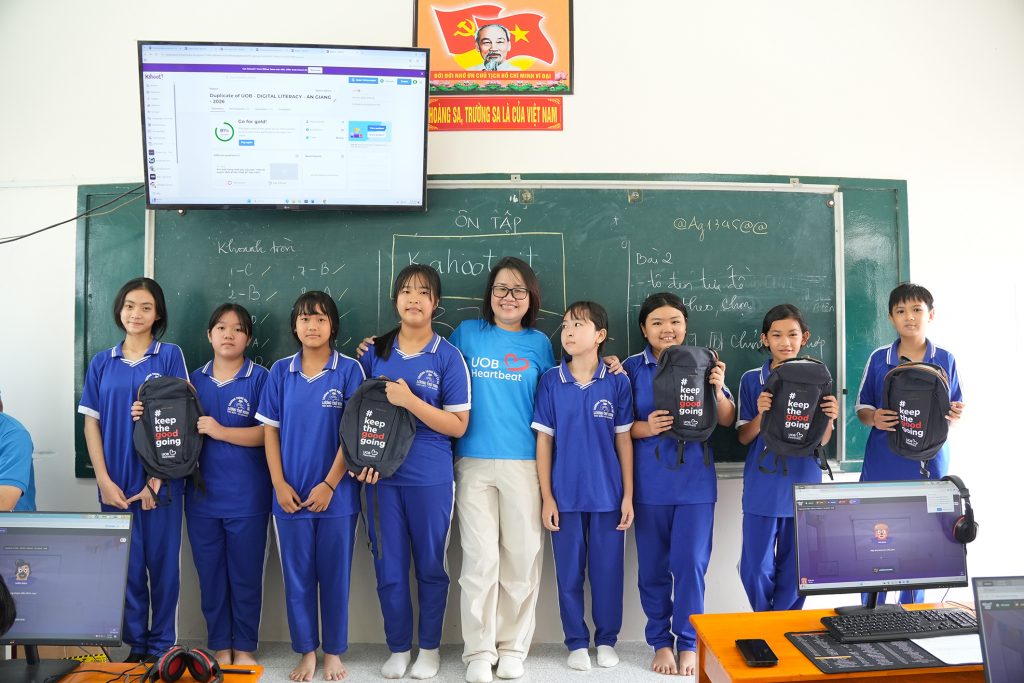

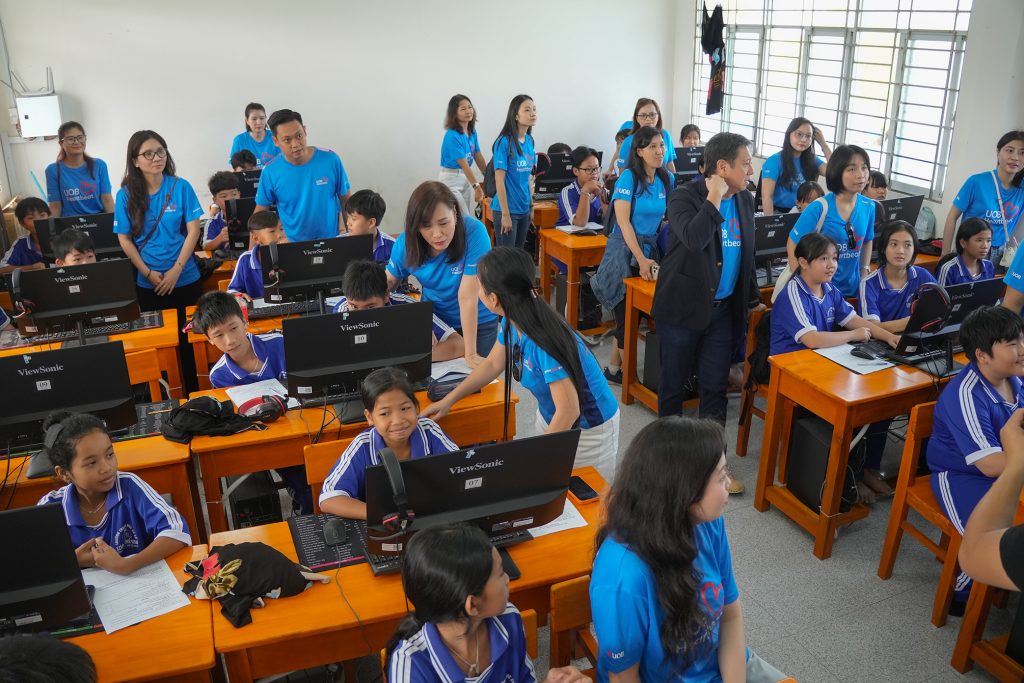
In total, the project delivered 58 computer sets—including three servers—as well as new desks and chairs. These upgrades mean that significantly more students can now participate in hands-on learning during class, rather than sharing limited or outdated equipment. Teachers are also better equipped to deliver lessons that meet current curriculum requirements.
The impact extends beyond the classroom setup. Following the handover, students took part in an interactive digital literacy session using Kahoot, where they explored topics such as safe internet use and basic technology skills. The activity created a lively, engaging environment that encouraged participation while reinforcing practical knowledge.
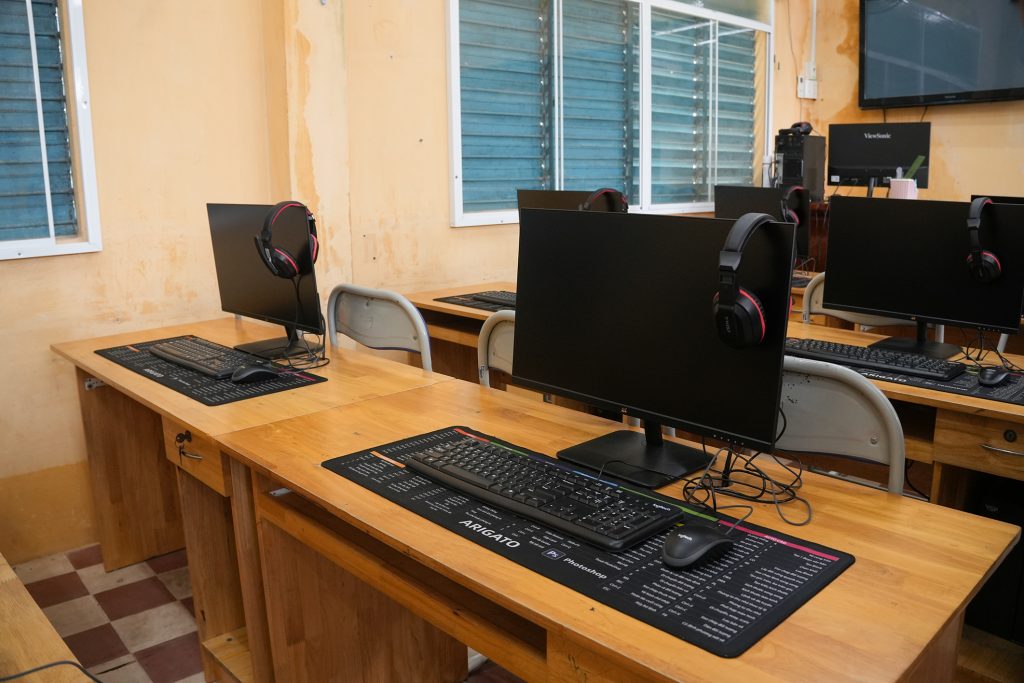
 This initiative is part of Saigon Children’s Charity’s School Building and Learning Environment Programme, which focuses on improving infrastructure to create safer, more effective learning spaces.
For the students in these schools, upgraded computer rooms open new possibilities. They can now access online learning platforms, participate in computer-based assessments, and explore technology-related competitions. More importantly, they are building confidence in using digital tools—an essential skill set for future education and employment.